
By Dr. Liam Johnston
As we find ourselves suddenly into the fall season, many athletes and active individuals begin returning to more structured training. Whether you’re getting back to hockey, soccer, basketball, running, CrossFit, strength training, or simply trying to get back into a regular gym routine, this time of the year often brings a noticeable increase in training intensity.
After a summer of recreational activity, vacations, golf, boating, outdoor sports, or a less structured workout schedule, it can be tempting to jump right back into the level of training you were doing earlier in the year.
The problem? Your motivation may be ready for high-intensity training before your body is. A sudden increase in training volume or intensity is one of the easiest ways to develop muscle soreness, joint irritation, tendon problems, or an overuse injury. The goal isn’t to avoid hard training—it’s to build back toward it progressively.

Your Fitness May Not Have Disappeared—but Your Tolerance Has Changed
One of the most important concepts when returning to training is understanding the difference between fitness and training tolerance.
You may still feel strong. Your cardiovascular fitness may still be relatively good. You may even be able to perform some of the same exercises and movements you were doing several months ago. However, your body may not currently tolerate the same amount of training stress.
Training creates stress on muscles, tendons, joints, ligaments, and the nervous system. When that stress is applied consistently and progressively, your body adapts. When the workload suddenly exceeds what your tissues are prepared to handle, problems can develop. This is why your first few workouts back can sometimes feel surprisingly easy—followed by significant soreness or pain 24–48 hours later. Feeling capable of doing something isn’t necessarily the same as being prepared to repeatedly tolerate it.

Avoid the "First Week Back" Trap
One of the most common mistakes when returning to training is trying to pick up exactly where you left off. For example, imagine someone who was previously squatting 225 pounds for five sets before taking several months away from structured training. They return to the gym feeling good and immediately attempt the same workout. They may successfully complete it. That doesn’t necessarily mean it was the right decision.
Instead of asking, “Can I do this?”, ask “Can my body currently tolerate this workload and recover from it?” Your first couple of weeks back should be viewed as a period of rebuilding rather than testing. Consider reducing one or more of the following:
● Weight/resistance
● Number of sets
● Number of training days
● Training duration
● Training intensity or speed
● High-impact or explosive movements
You don’t necessarily need to reduce everything. Even a modest reduction in workload can give your body an opportunity to readapt.
Soreness or Injury? Know the Difference
One of the most common questions when returning to exercise is: “Is this just soreness, or did I actually hurt myself?” It’s an important question because some discomfort following a workout is completely normal, particularly when you’re returning after a period of reduced
activity.
Typical post-exercise muscle soreness tends to develop gradually after a workout, is often felt in the muscles that were trained, and generally improves over the following few days. It may feel uncomfortable, but it shouldn’t progressively worsen or significantly change how you move.
An injury or irritation may look different. Pay closer attention if you experience:
● Sharp, sudden, or localized pain during an exercise
● Pain that consistently occurs with a particular movement
● Swelling or significant bruising
● Noticeable weakness or loss of strength
● A significant reduction in range of motion
● Pain that causes you to change the way you walk, run, lift, or perform your sport
● Symptoms that continue to worsen rather than gradually improve
● Pain that repeatedly returns every time you train
The important thing is not necessarily whether you experience any pain. Instead, pay attention to the pattern, severity, and behaviour of the symptoms. A little muscle soreness after your first few workouts back may simply be part of the process. Persistent or progressively worsening symptoms deserve more attention.

When Should You Get Assessed?
You don’t have to wait until an injury becomes severe before getting it assessed. If you’re dealing with a nagging problem that isn’t improving, keeps returning, or is preventing you from training the way you’d like, that can be a good time to consult a healthcare professional. An assessment can be particularly useful when:
● The pain isn’t improving. If you’ve modified your activity and the symptoms aren’t gradually settling, it’s worth having them evaluated.
● The same problem keeps coming back. Recurring pain may indicate that simply resting until it feels better isn’t addressing the underlying issue.
● Your performance or movement has changed. If you’re compensating, losing range of motion, or unable to perform an exercise normally, an assessment can help determine why.
● You’re unsure whether you should keep training. You don’t always have to completely stop exercising. Often, the goal is to identify what movements or training loads you can tolerate and gradually build from there.
● You’re preparing for a major return to sport. If you’re transitioning back into high-level competition after time away or following a previous injury, getting assessed before increasing your workload can help establish an appropriate starting point.
The goal of an assessment isn’t necessarily to tell you to stop training. In many cases, it’s about figuring out how you can continue training while managing the problem appropriately.

Don't Underestimate Recovery
Training is only one part of the equation. Your body adapts to exercise during recovery, not while you’re performing the workout itself. Sleep, nutrition, hydration, and rest days all contribute to your ability to handle increasing training demands. As your training volume increases, pay attention to how you’re recovering between sessions. Ask yourself:
● Am I still significantly sore when my next workout begins?
● Has my performance been consistently declining?
● Am I feeling unusually fatigued?
● Are minor aches becoming more persistent?
● Am I having difficulty sleeping or recovering?
● Am I losing motivation to train?
These can be signs that your current workload is exceeding your ability to recover. More training isn’t always better training.
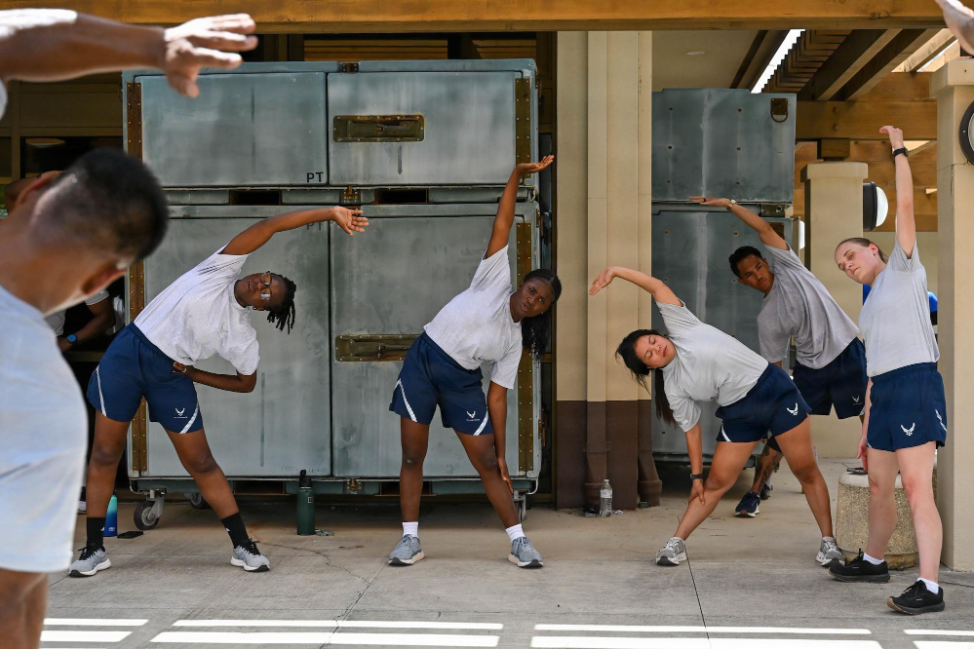
Warm Up for the Workout You're About to Do
A warm-up should prepare your body for the demands of the upcoming activity.
Rather than spending 20 minutes performing random stretches, consider gradually moving through the positions and movements you’ll actually encounter during your workout.
For example, before a lower-body strength session, you might include:
1. A few minutes of light cardiovascular activity
2. Dynamic movement
3. Bodyweight versions of your primary exercises
4. Progressive warm-up sets
5. Sport-specific movements if appropriate
If you’re preparing for a sprinting or field-sport session, your warm-up should eventually include progressively faster running, acceleration, deceleration, and change-of-direction movements.
The goal is to gradually transition your body from rest to the demands of your training session
The Bottom Line
Getting back into high-intensity training after the summer is a great way to rebuild strength, conditioning, and performance heading into the fall and winter.
Just remember that motivation often returns faster than physical capacity.
Give your body time to readapt. Start below your previous maximum workload, gradually increase training demands, prioritize recovery, and learn to recognize the difference between normal post-exercise soreness and symptoms that may require further assessment.
You don’t need to avoid hard training—you need to earn your way back to high intensity.
And if something doesn’t feel right, don’t simply push through it for weeks hoping it will disappear. Persistent, worsening, or recurring pain is a good reason to have the problem assessed and determine the best way to keep moving forward.
If you’re returning to training this fall and have a nagging ache, recurring injury, or movement limitation, consider booking an assessment with one of our Chiropractors or Massage Therapists to help you get back to doing what you enjoy!
